
Life is full. The bucket that was 2025 proved to be weightier than most, which I wasn’t sure was physically possible. But here we are now at the end. We set a high bar for ourselves this year, and for the most part things went according to plan in terms of workshops and projects. The end of the year always feels like a landmark, but I’m also well aware that the gears never truly stop turning. As I expected, I once again utterly failed to provide substantive project updates throughout the summer or fall, so I’ll attempt to catch you up now.
Our goal for 2025 was this: let’s get as close to the top of that bucket without spilling over. We scheduled six workshops, the most we’ve ever offered in a single season. Three or four distinct building projects, and a smattering of contract work. Pizza Nights continued. An art parade and giant backpack puppet were born.
Right now, I’ll focus on one of our main projects. Back in December 2024, we decided to design our newly-raised timber frame into a usable space for humans (instead of serving as much-needed storage space — I’m still looking for that big empty building, folks). That set the stage for much of our spring and summer work. And this was the first year we did three Japanese Carpentry Workshops back to back, as well. I’ve never run a marathon, but I think this is about as close as I’ll ever get to that feeling.

The Year of the Kura
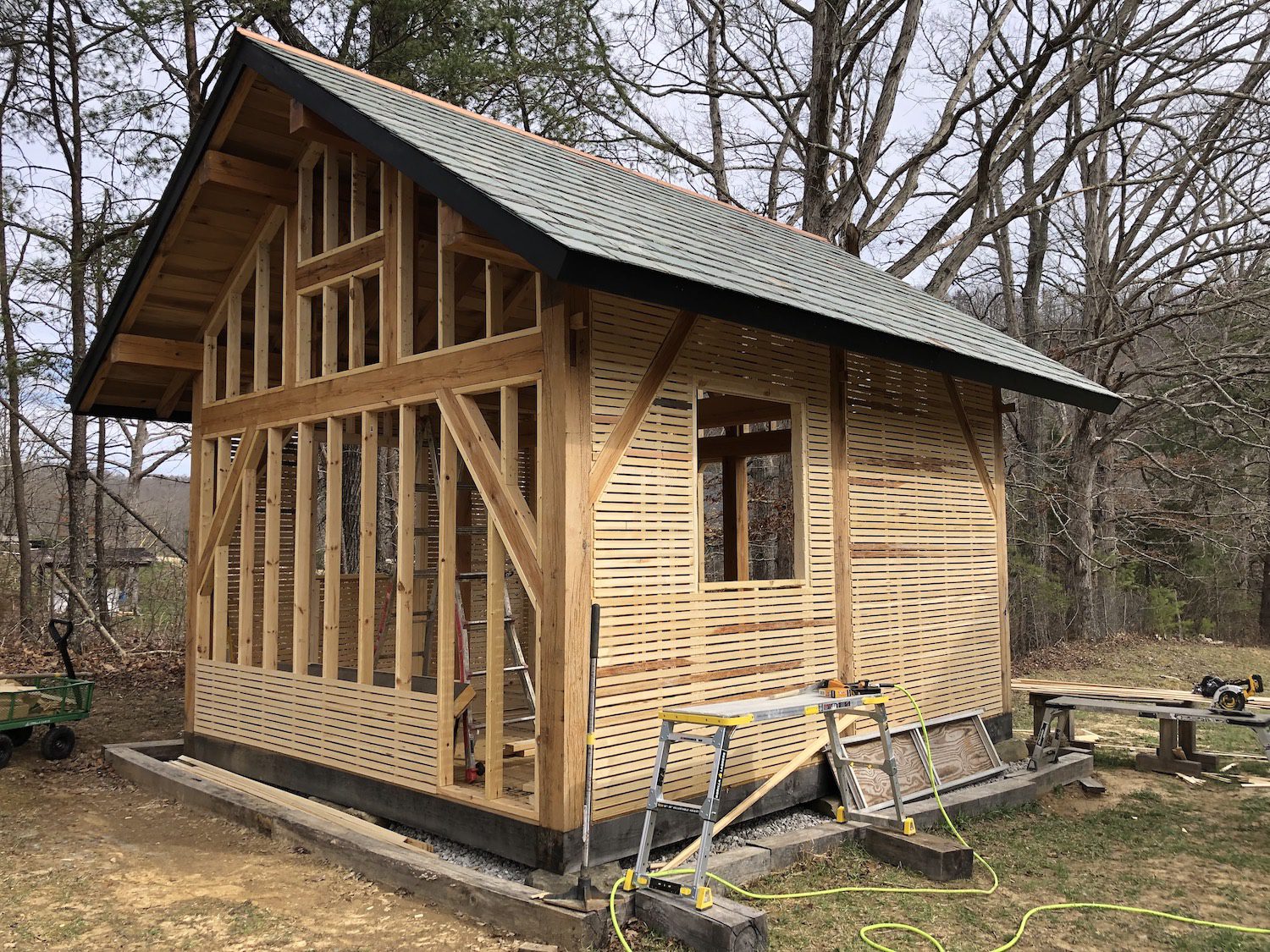
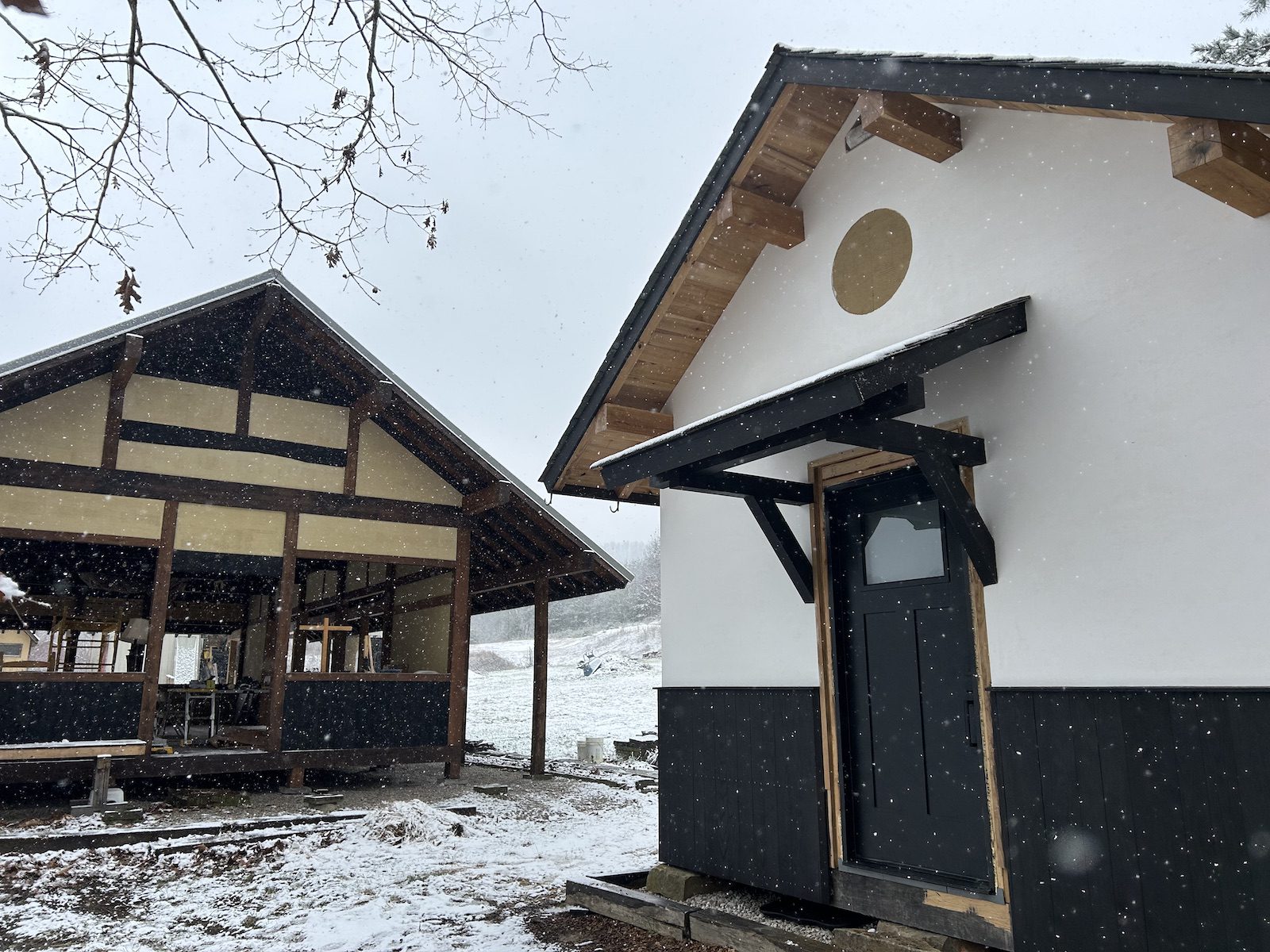
We modeled this structure after a kura, or a Japanese storehouse. The construction methods and ornamentation for real kura are very different than how we actually built this, hence the “Kentucky kura.” Historic kura utilize thick earthen walls reinforced with whole bamboo lattice, and often feature elaborate shikkui plaster finishes and amazing moulding details. Sometimes they have intensely heavy and ornate plastered doors and window shutters, too. They were some of my favorite buildings from our 2018 trip to Japan.

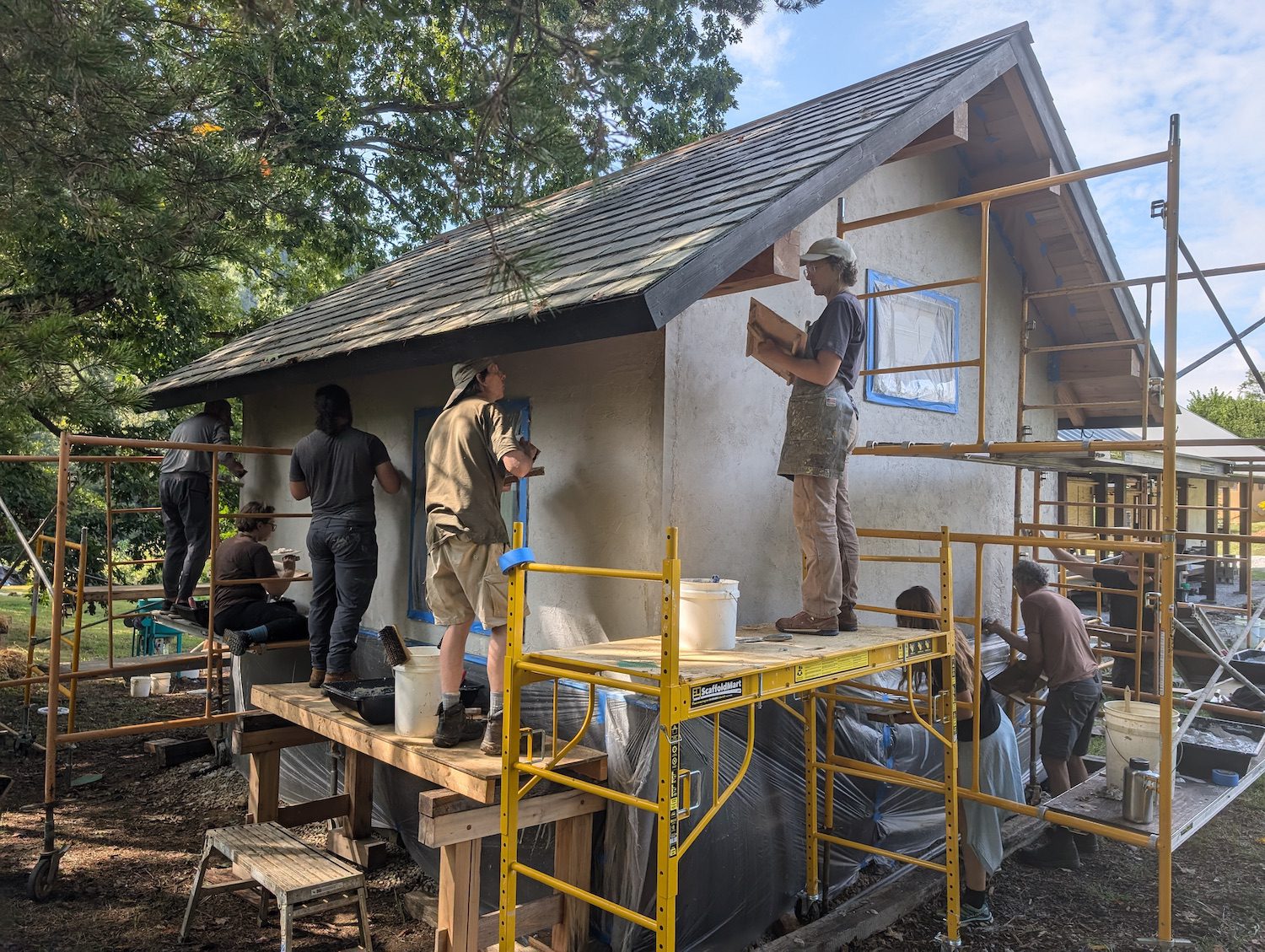
This structure folded into our workshop scheme nicely — light clay straw walls would be built in our Natural Building Essentials Workshop, and eventually those walls would be plastered in our Japanese Plastering Workshop at the end of summer. Amazingly, that more or less happened according to plan. It was no small feat to meet our deadlines to have everything ready for each class, especially since it was happening alongside other separate projects — building a new awning addition on the pavilion, plaster wall construction in the pavilion, and a new 14×24 timber frame headed for NC.
 Kura Building Timeline

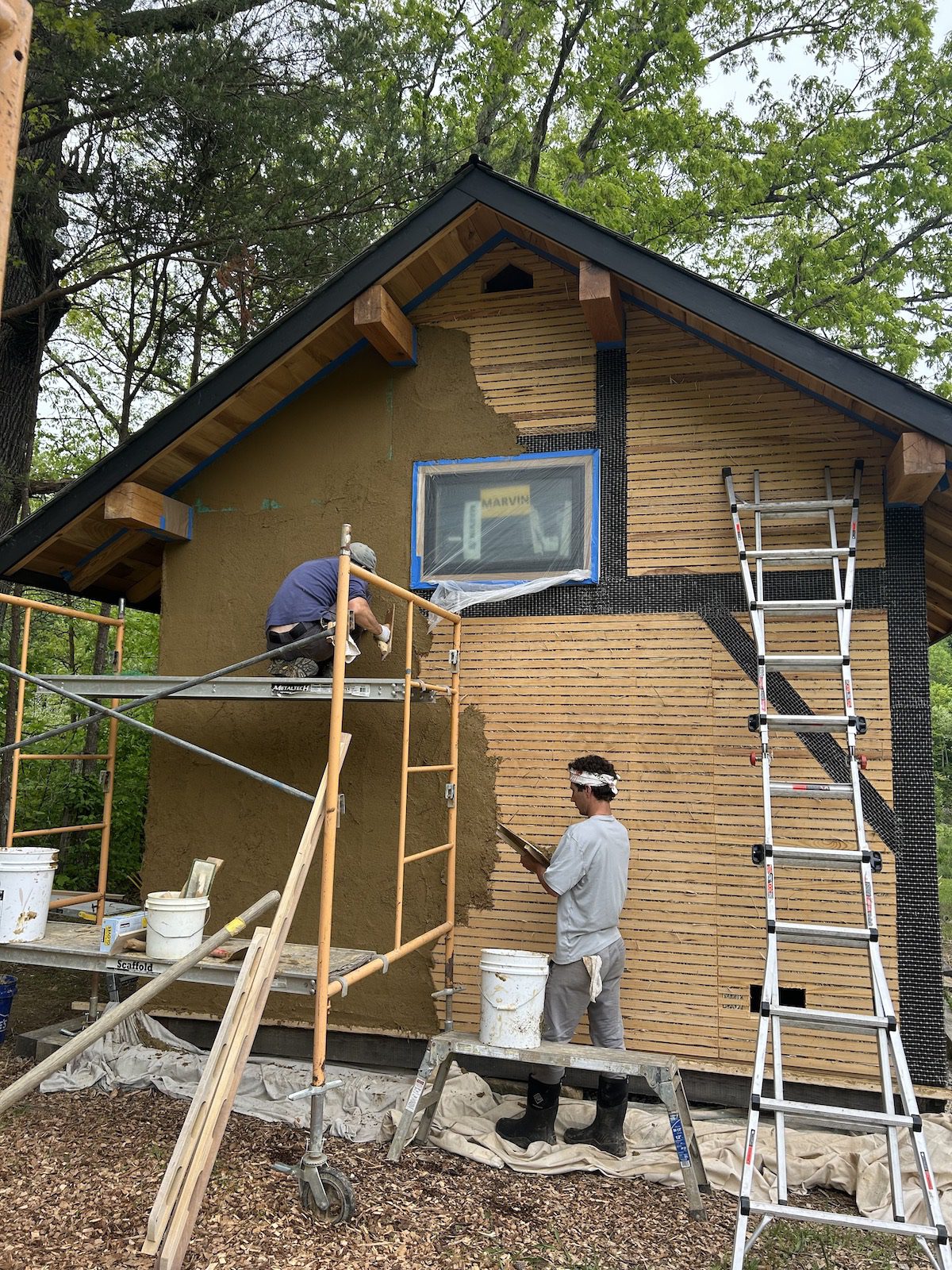
This building has been a fun one. The satisfaction when working on a small building like this is that the visual progress happens quickly. In a day or two, the whole building got a completed coat of plaster on the exterior, for example. The challenge of a small building like this is that you always have to be ready for the next thing, especially when a deadline is looming. It was hard to get fully invested in the work of the moment, because I had to constantly manage what was coming up next.

Framing, material sourcing, plastering, window installs, trim, electrical… hat switching to the max. There were some slip ups, mostly minor though.
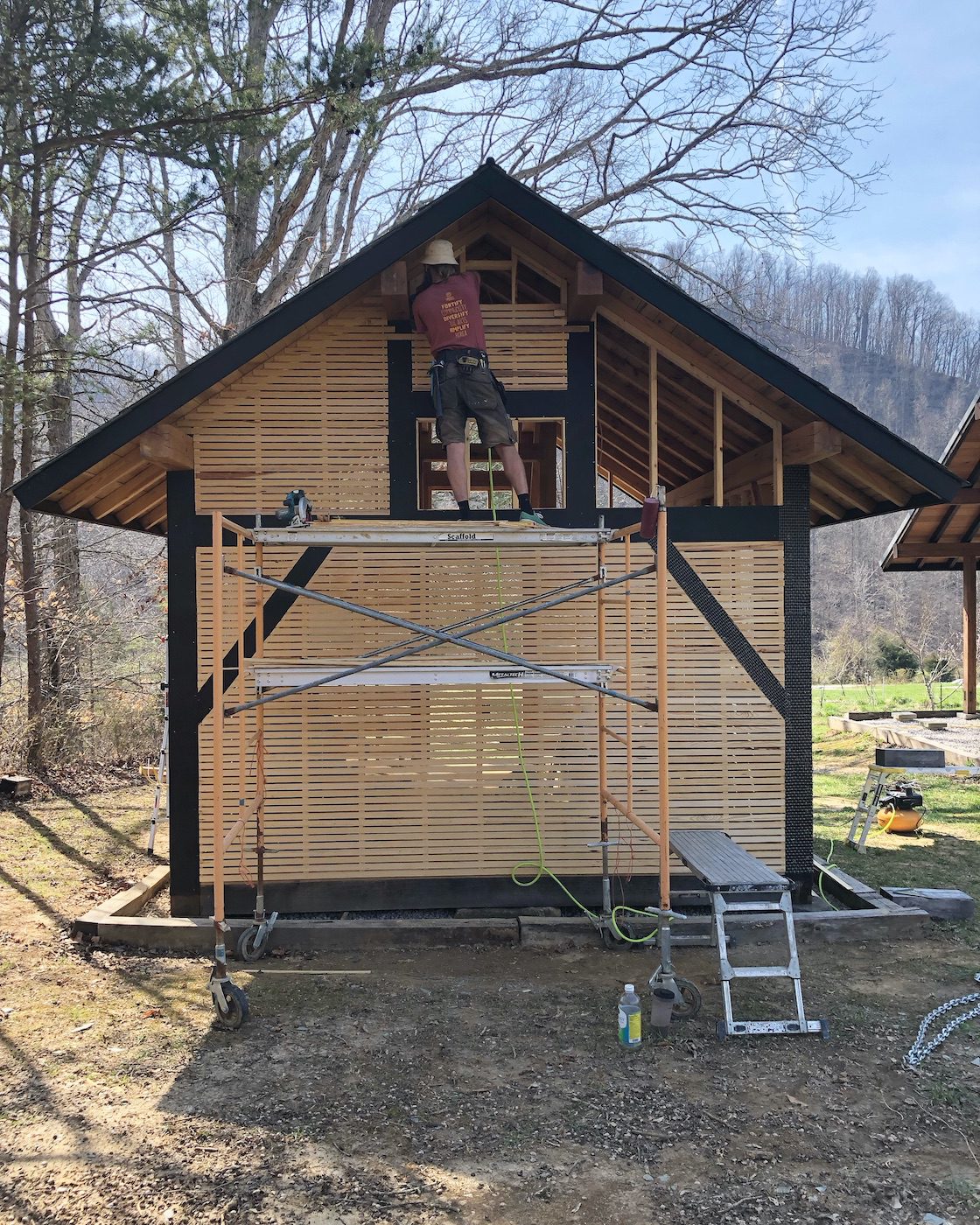
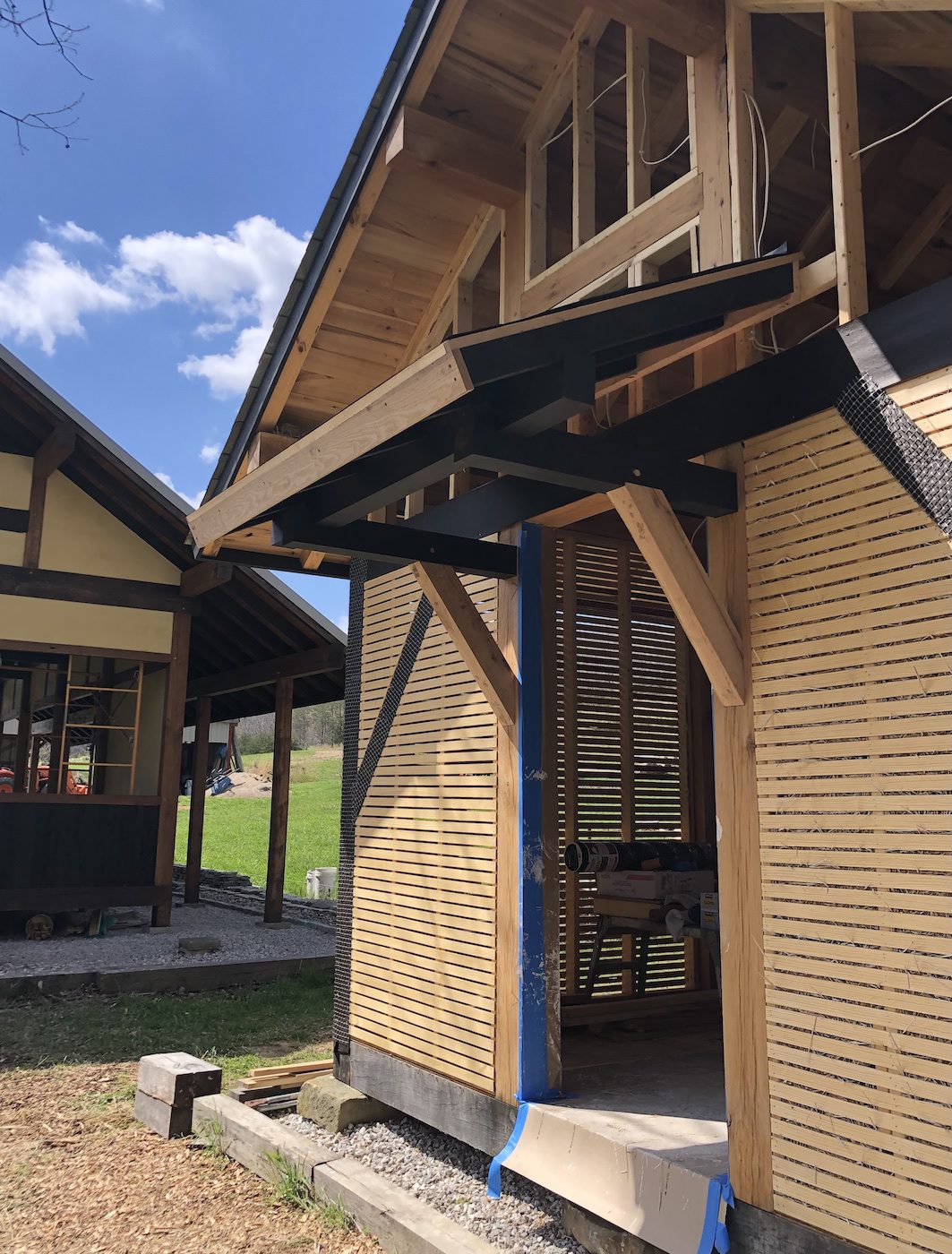
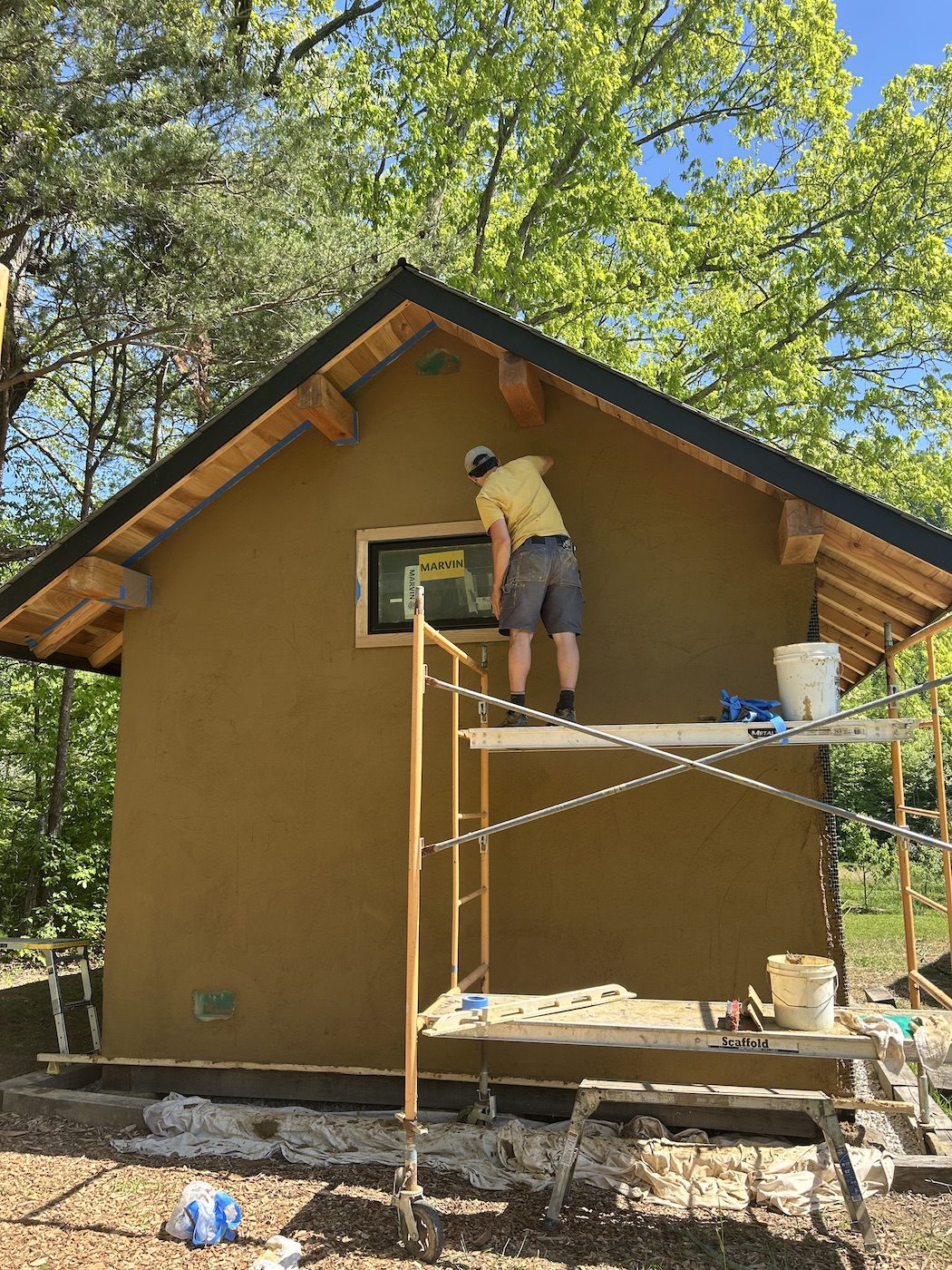
Looking back through photos, it’s gratifying to see that the kura started as a naked frame with roof back in January, and is now fully enclosed with a finished floor 12 months later. As early as February, it was time to hustle. We framed infill walls, installed permanent wood lath, insulated the floor, installed a subfloor, added the front door roof awning, installed wiring, and hatched a plan for countless other upcoming construction details and decisions.

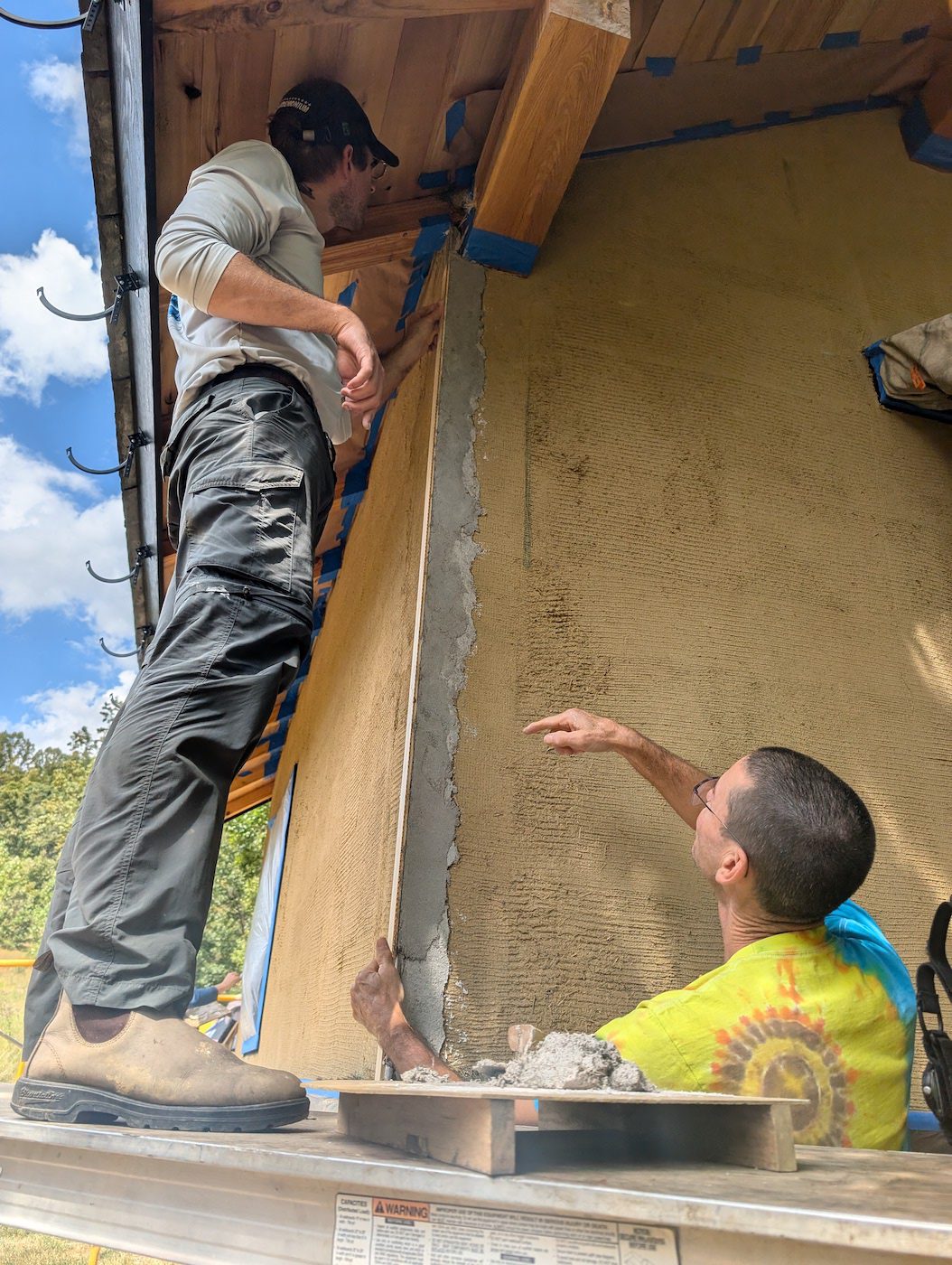
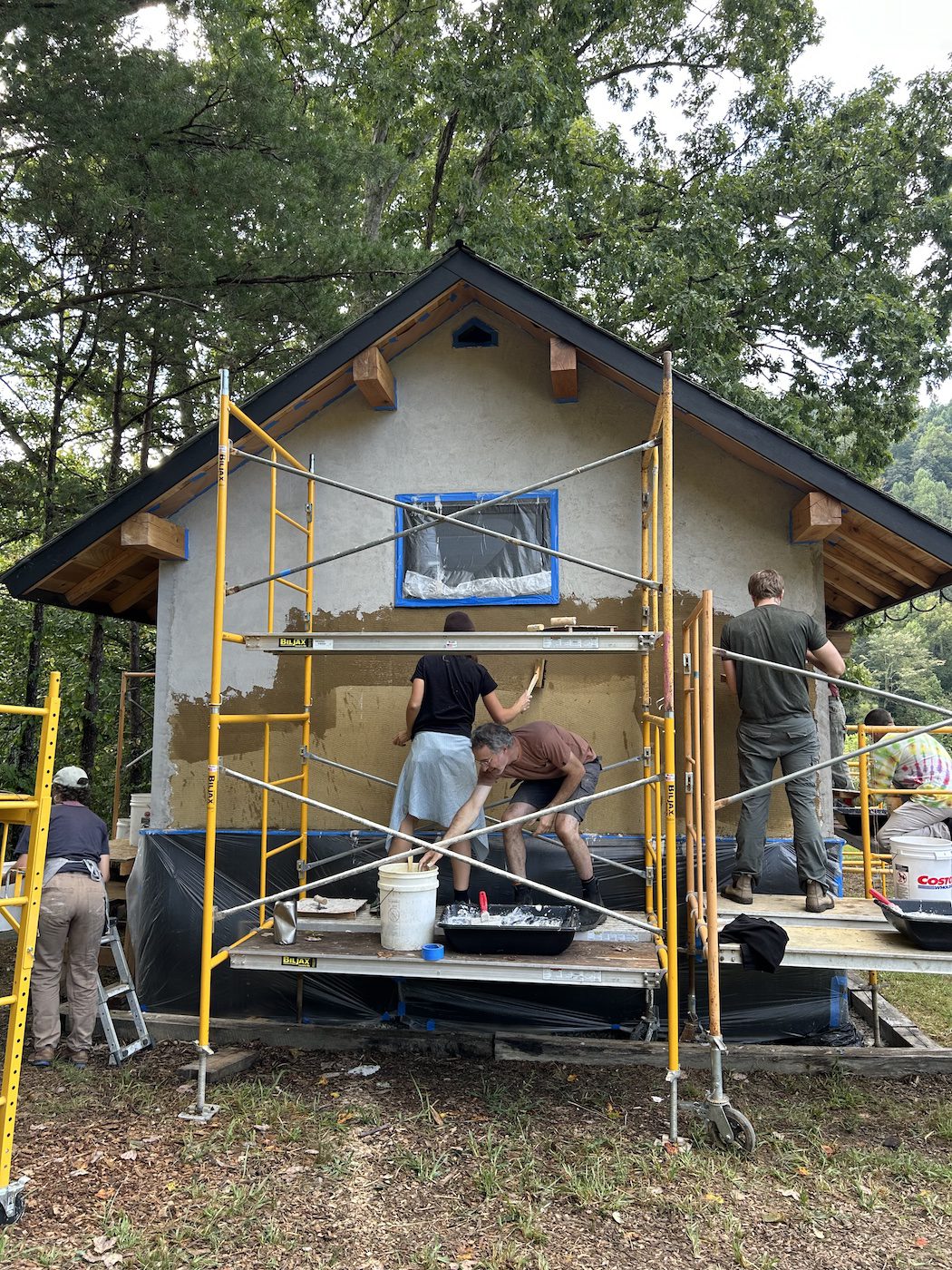
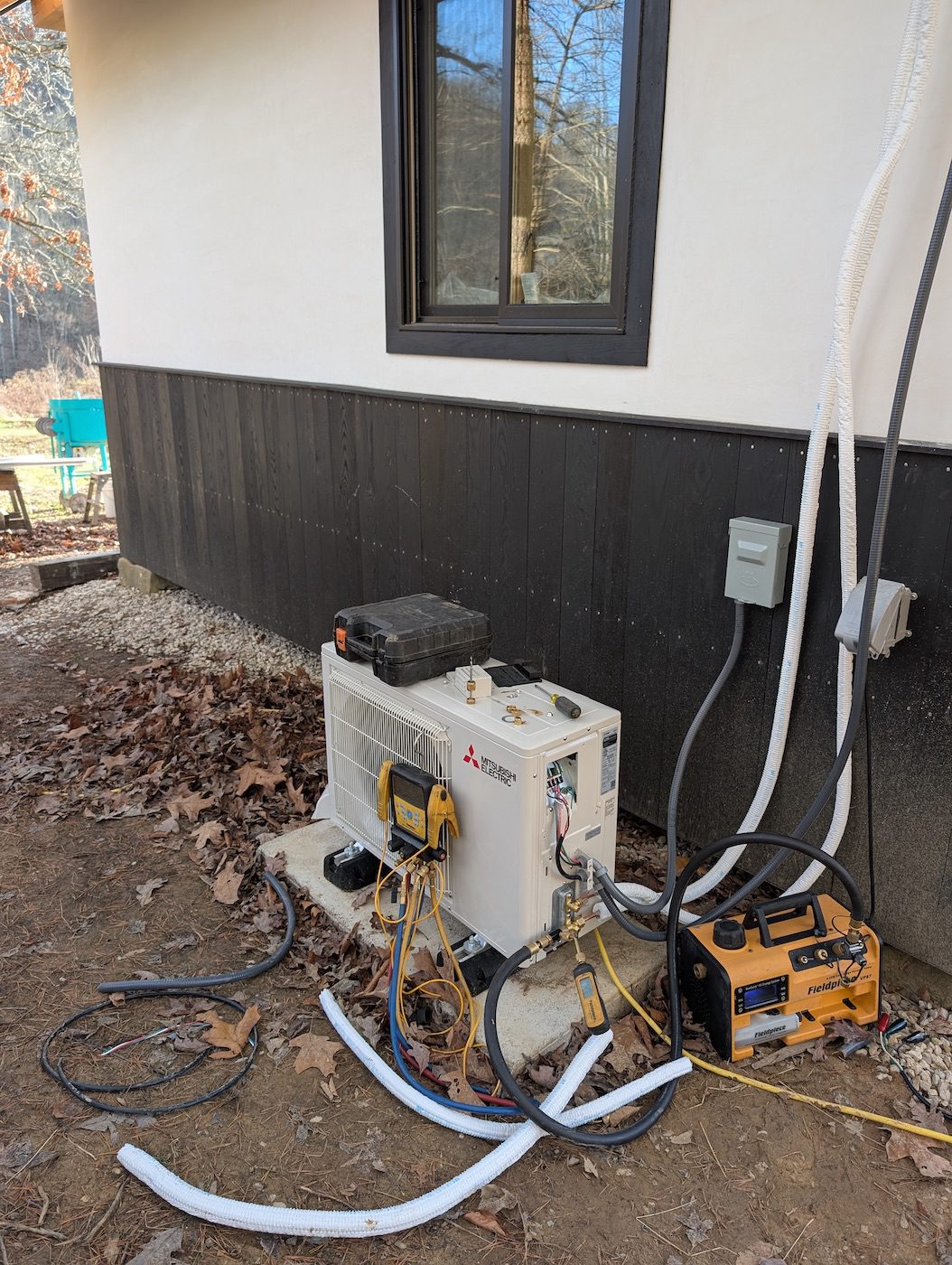
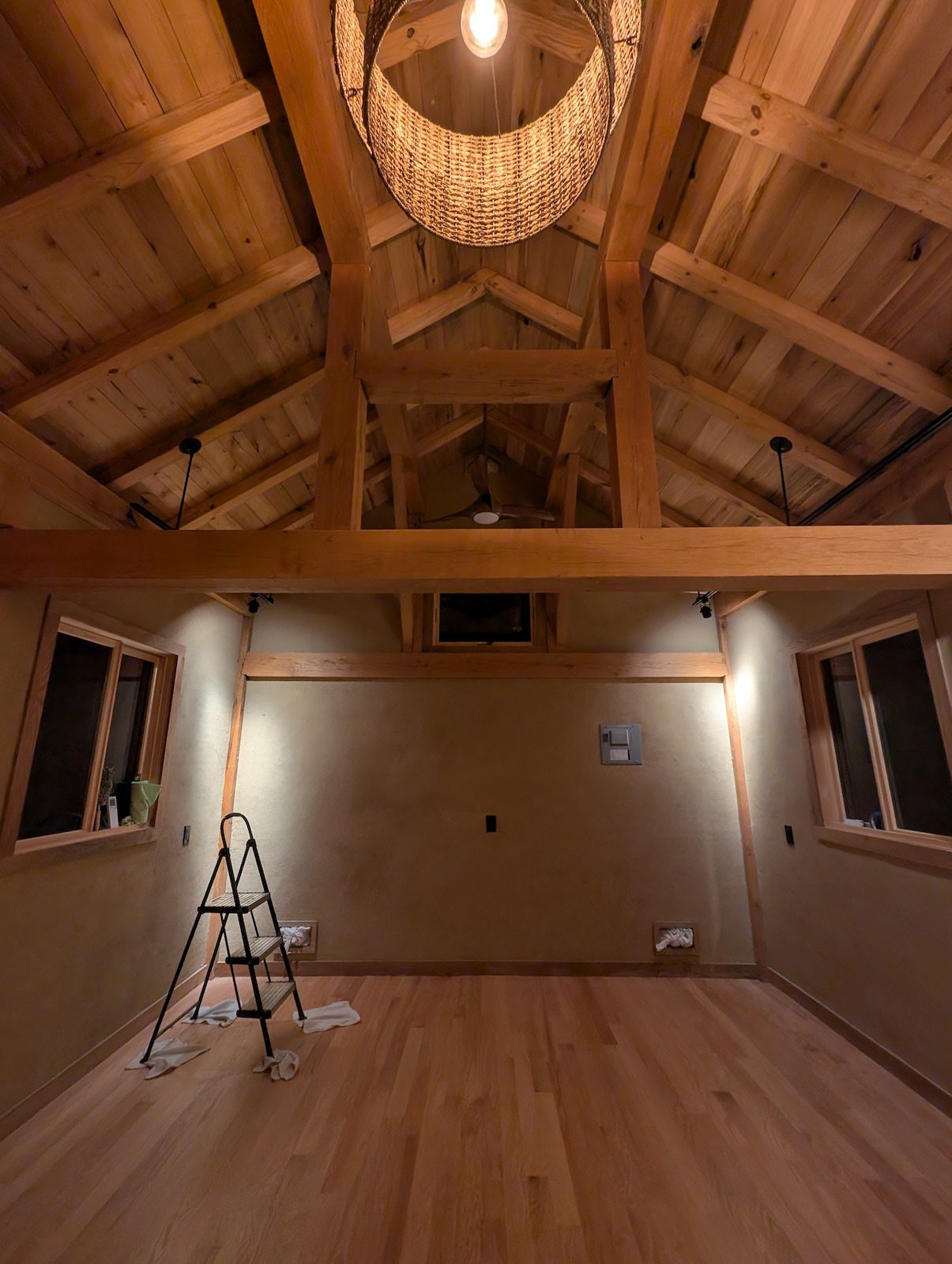
In May, we built the light clay straw walls and began plaster work. In strategic windows throughout the summer, we finished the first coat of exterior plaster, exterior wood skirting, hardwood floor installation, and some interior plaster work. After our Japanese Plastering Workshop, we finished the interior plaster work, finished the oak floor, installed lighting, and got the mini split installed.
Now it’s a matter of furnishing to be truly usable.
Kura Highlights
Personal kura highlights for me include: an epic day of plastering in our Japanese Plastering Workshop to apply the shikkui finish with 16 students. Two coats of shikkui, 4 passes in total, rain pouring down at one interval and threatening to shut down the whole flow.

Somehow, everything panned out and the transformation was as dramatic as the day itself — what was once brown and coarse was now gleaming bright white with crisp corners and a luminance that only shikkui can achieve.

Another highlight — running electrical to the building from our new electrical subpanel. The digging was more exhausting than I thought it should be, but getting it done in a day’s time, finishing almost exactly at 5:00 p.m. filled me with gratification. Other high points — installing the exterior wood skirting, and that long awaited day when we finally got the front door put in.

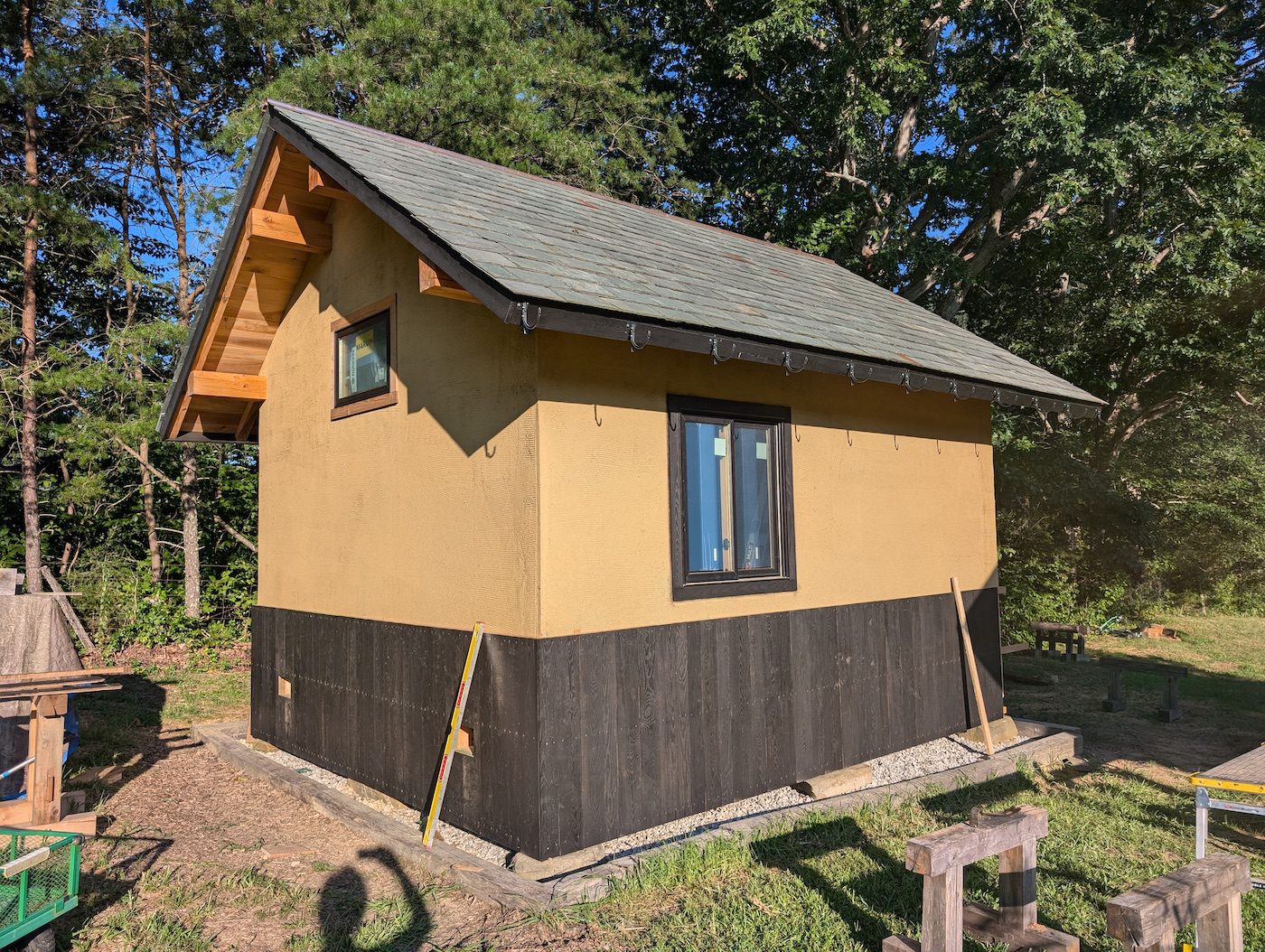
I’m pretty happy with this little structure. The kura has an oak timber frame, slate roof, shikkui exterior finish, brown coat earthen plaster interior finish, red oak floor, and a linseed oil-painted wood siding detail on the outside. The walls are light clay straw with permanent lath, a lovely plaster substrate. A mini split provides heat and air. Honestly, the insulation in this building is below my ideal, but this is not a building that will be inhabited full time. It will primarily serve as office and art studio space.
And finally, three separate workshops helped bring this building to life! Natural building forever.